
4. Sea temperatures and sea ice
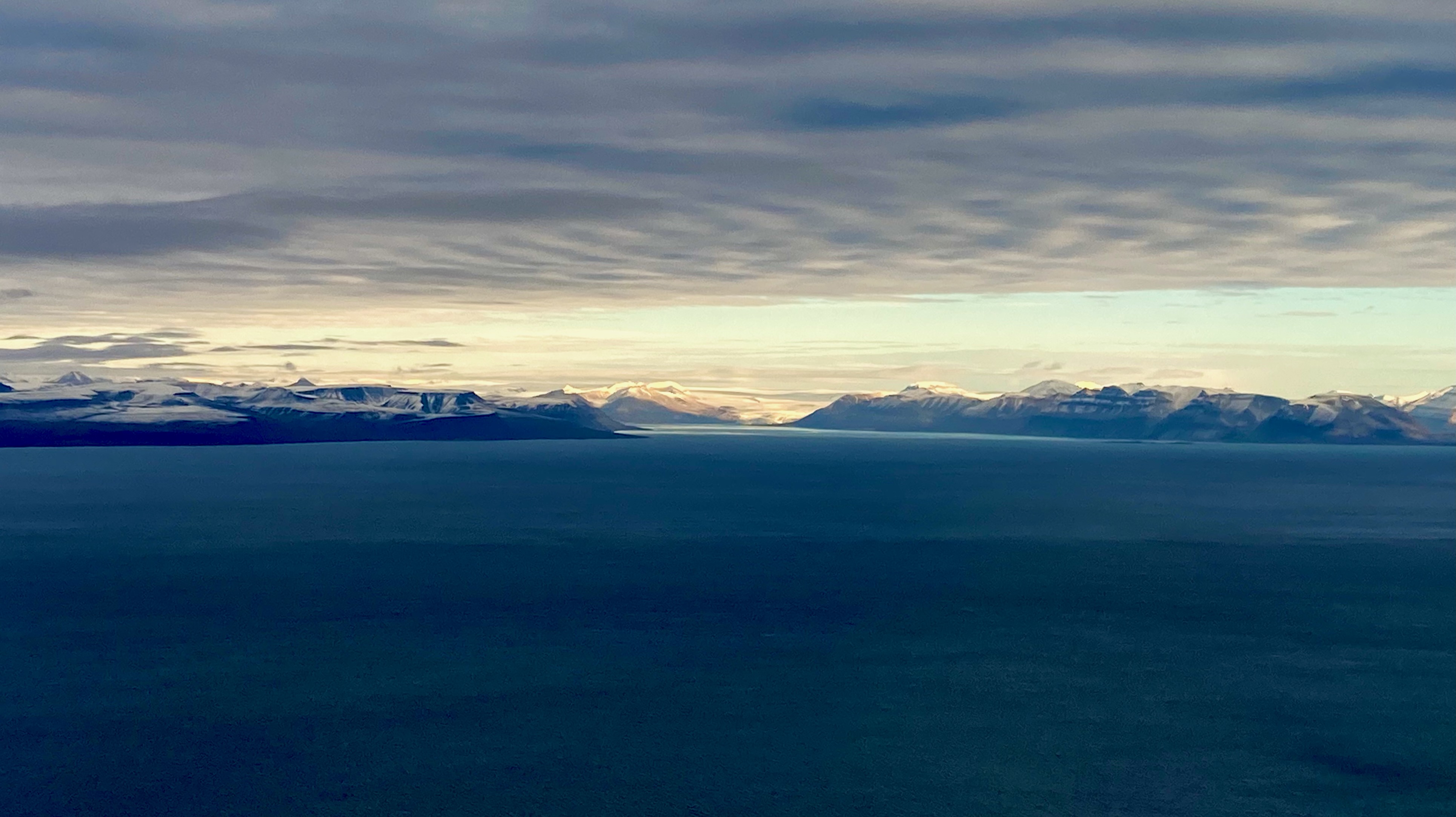
Western Svalbard is relatively warm due to the strong influence of the West Spitsbergen Current (the continuation of the Gulf Stream) along the western and northern Spitsbergen shelf break, resulting in little or no sea ice in this region (Figure 3). Prior to 2005, sea ice formed in many of the fjords in western Spitsbergen, but after 2005 changes in weather patterns combined with slight changes in sea water densities have resulted in more frequent and larger intrusions of warm Atlantic or modified Atlantic water into fjords (Nilsen et al 2008, Skogseth et al 2020).
This large amount of heat that enter the fjords has positive feedback on the local and larger scale weather, leading to warmer and more humid winter temperatures in Svalbard (Binder et al. 2017, Hanssen-Bauer et al. 2019). As a consequence, less intense cooling of surface waters occurs in winter, which prevents sea water from freezing, with the exception of shallow inlets and fjords, as well as fjords with physical barriers, or sill fjords, which prevent warmer water from the outside to enter the fjords in first place (see figure 4). Open water allows for more wind mixing and warmer heavier Atlantic water from below is continuously mixed up to the surface (Ivanov et al., 2016).
In the north-eastern parts of Svalbard, cold Arctic waters and seasonal sea ice still prevail. Continuous sea temperature measurements from sea observatories (moorings) placed in Kongsfjorden (West Svalbard) and Rijpfjorden (North Svalbard) since 2001 and 2006, respectively, show that Kongsfjorden has become much warmer while in Rijpfjorden the temperatures are very variable with no significant increase in sea temperature the last decade (see Figure 4; Cottier et al. 2021).
4.1 Impacts on tourism
For ships, less sea ice makes it easier to operate in Svalbard and since 2006, a strong increase in ship traffic, both fishing vessels and passenger ships, is registered in Svalbard. In addition, the season now starts much earlier and ends later than before (see Figure 6, Stocker et al. 2020). Less sea ice in Western Svalbard has turned the spring months (March to May) into a significant tourism season for ship-based tourism, particularly the expedition cruise segment, after a ban on heavy fuels was introduced in protected areas. It is likely that a continued reduction in sea ice in northern and easter part of the archipelago will allow the spring cruise tourism season to also expand to these regions, barred any regulatory hindrances. On the other hand, reduced fast ice in the western fjords bars snowmobile tourism traffic, particularly the route between Longyearbyen and Pyramiden (see figure 6). While the part of the fjord where the snowmobile route crosses used to have fast ice for four to five months, it now only has ice for one to two months. In a future with a high emission scenario, there will barely be any fast ice in any of the fjords of Spitsbergen.